
Kojic acid soap private label is unglamorous work, and it is easy to get wrong: a formula nobody reviewed, a claim a regulator dislikes, or a carton printed with the wrong net weight can leave a first batch sitting in a warehouse. By the end of this guide you will have a scoped brief, a sample plan and a launch checklist you can hand to a supplier.
What Is The Minimum Order?
The minimum order for private label kojic acid soap is usually set per color or style, not per order. At one factory, Poleview, it is 1,000 sets per color or style, provided there is no special container or accessory. Anything custom beyond the bar itself can push that number up.
MOQ Per Style
A per-style minimum means a range of three bars costs three times the commitment of one bar. If a supplier quotes 1,000 per style, a three-style launch is 3,000 units, and each style must sell through on its own. Most new lines do better with one or two styles, then add a third once reorder data exists. Ask whether "style" means a different scent, a different color, a different pack or all three, because suppliers define it differently.
What Raises The Minimum
Custom molds, rigid boxes, tins and other special containers are the usual reasons a minimum goes up. Accessories packed with the bar, such as a sponge or a hanging net, can do the same, because they add a second supply line to the order. A plain wrapped bar in a standard shape sits at the low end. If your budget is tight, change the packaging before you cut the formula.
Phase One: Scope The Line
The goal of this phase is a one-page brief written before any supplier conversation. A supplier can only quote accurately from specifics, and a vague request usually returns a vague price. Work through these steps in order.
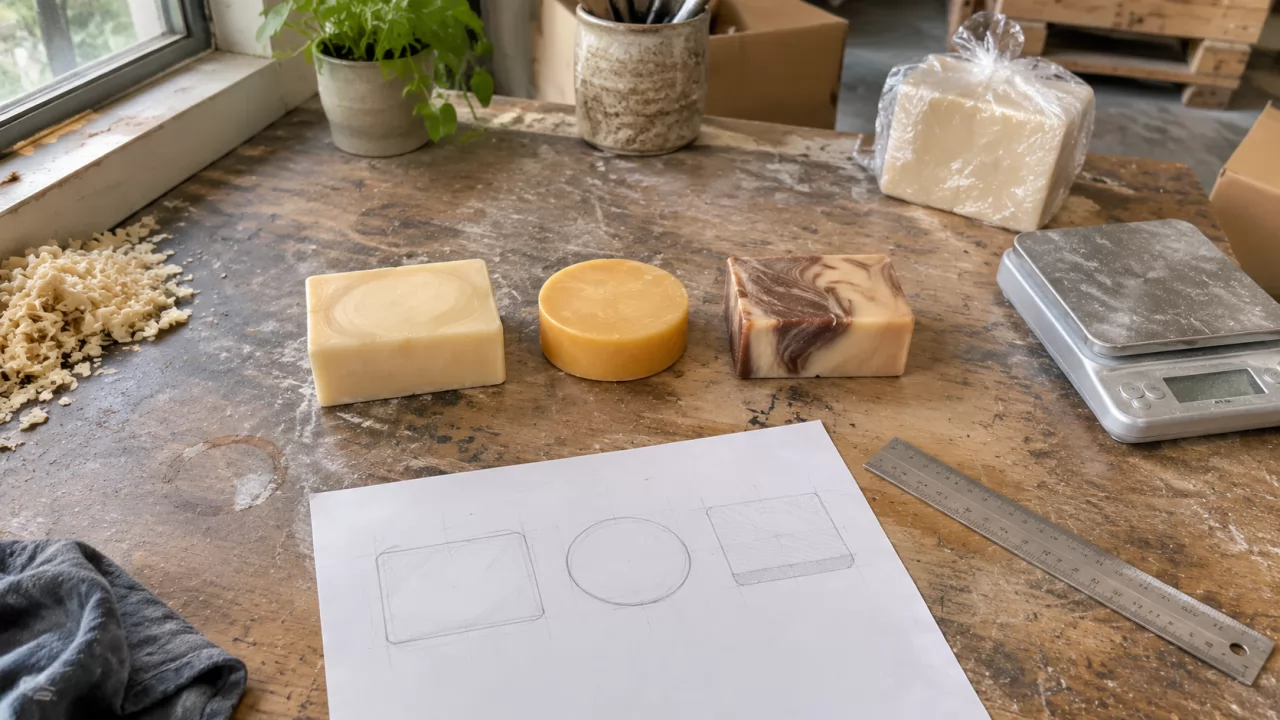
- Choose how many styles you will launch. One or two is a sensible first range, given the per-style minimum.
- Set a price tier and a destination market. Both shape the formula, the packaging and the label rules you must follow.
- Write down the claims you may legally make in that market. Do this now, because claims decide label copy and artwork. Caution: this is the step most often skipped. Teams design the carton first and discover later that a phrase on it is not allowed.
- Pick a bar size and shape. State the net weight in grams, since it affects mold choice, packaging size and freight.
Phase check: give the brief to a supplier and see whether they can quote without follow-up questions. If they come back asking about weight, scent or destination, the brief is not finished.
Kojic Acid Soap Formula Basics
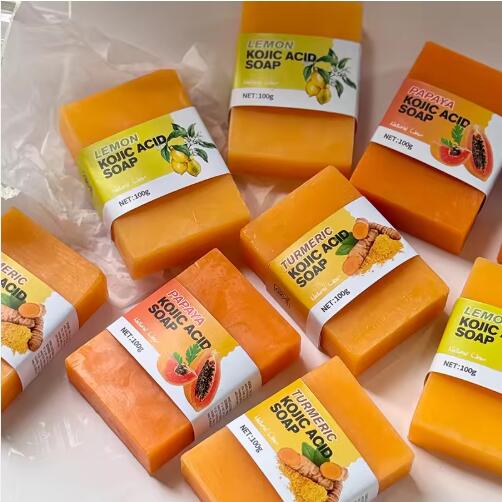
Kojic acid soap is a cleansing bar that contains kojic acid, an ingredient derived from fermentation, usually alongside a base such as saponified oils. In private label, the formula carries more risk than the logo does. A weak logo costs you some sales; a weak formula can cost you a recall, a listing or a customer complaint. Ask for what is in the bar, not for adjectives about it.
Reading The INCI List
INCI (International Nomenclature of Cosmetic Ingredients) is the standard naming system for ingredients on cosmetic labels. Ask the supplier for the full INCI list of the exact formula, in descending order of concentration. Check where kojic acid appears, since position hints at how much is present. Then confirm that the label on your carton matches the batch you receive. A label copied from a different formula is a compliance problem, even if the soap itself is fine.
Claims To Avoid
Describe the soap by its ingredients and how to use it. Do not claim it treats a skin condition, whitens or lightens skin, or removes dark spots. Those are medical or result claims, and many markets regulate them as drug claims or require evidence you will not have. "Brightening look" wording is only an option where your market allows it, so check first. Rules differ between the US, the UK, Canada and the EU, and a supplier's sample copy is not a substitute for checking your own market.
Patch Testing And Stability
Ask the supplier what stability and patch-test plan exists for the formula, and request it before launch. A patch test applies a small amount of product to a limited area of skin to look for a reaction; it reduces risk but does not guarantee anyone's safety. Kojic acid is known to be sensitive to light and air, so ask how the supplier protects it in storage and what happens to color and scent over time. Do not describe the soap as hypoallergenic or suitable for all skin types without test reports to back it up.
Phase Two: Sample And Approve
The goal is one approved sample that the bulk batch will match. Follow these steps, and treat the last one as binding.
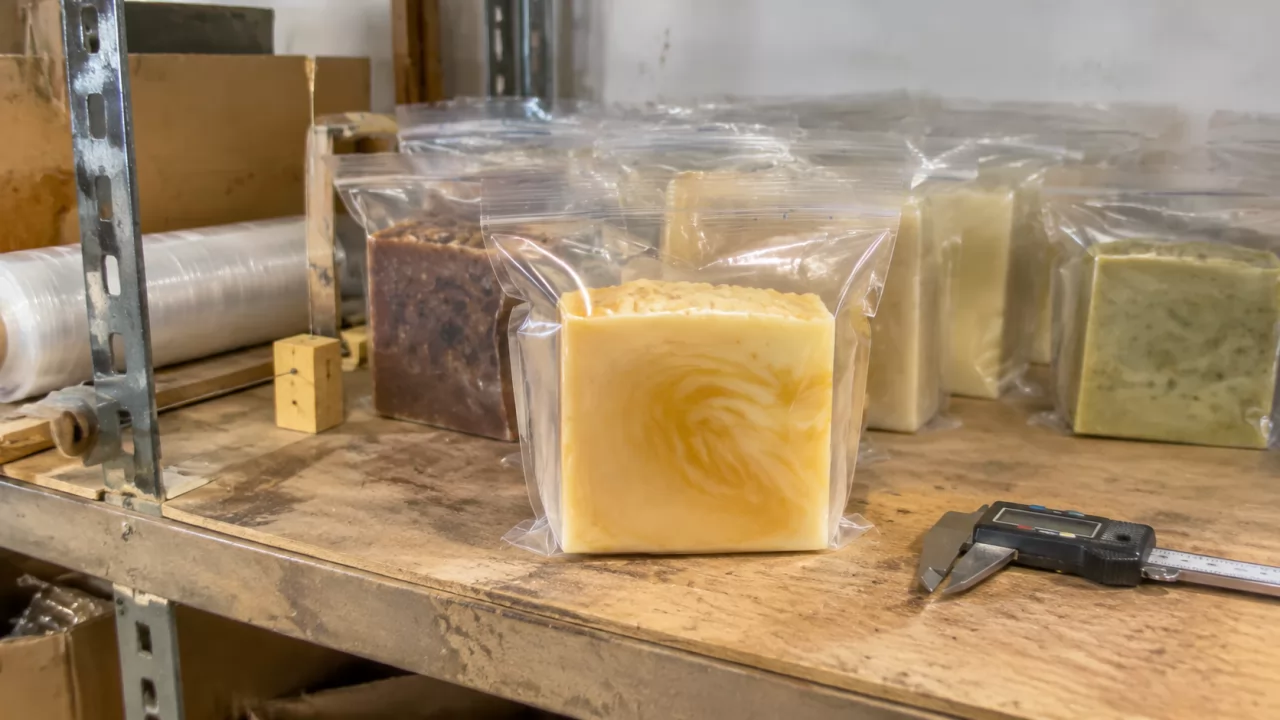
- Request a sample of the formula and bar format from your brief.
- Compare it with the brief: weight, color, scent, texture, and the INCI list on the sheet.
- Have a few people use it and note any reaction or complaint. This is an informal check, not a safety study.
- Lock the formula in writing, with the INCI list, weight and appearance described. Caution: a verbal "looks fine" is where most disputes begin. If the approval is not written down, nobody can prove what bulk was supposed to match.
Phase check: the approved sample is kept as the reference, by both you and the supplier, and sealed and labeled. When the bulk batch arrives, you compare it against that bar, not against memory.
Sample Timeline And Costs
Here is how the process runs at a factory that offers free samples, as in the facts supplied for this article. Check each point with your own supplier.
| Stage | What happens | Who pays |
|---|---|---|
| Sample request | You send brief and full address | No charge for the sample |
| Freight payment | You pay shipping costs | Buyer |
| Dispatch | Sample arranged after payment | Included in freight |
| OEM/ODM production | Bulk run after approval, about 40 days | Per order terms |
Free samples remove most of the cost risk, but the 40-day production clock only starts after approval, so slow sample rounds delay the whole launch.
Private Label Soap Packaging Choices
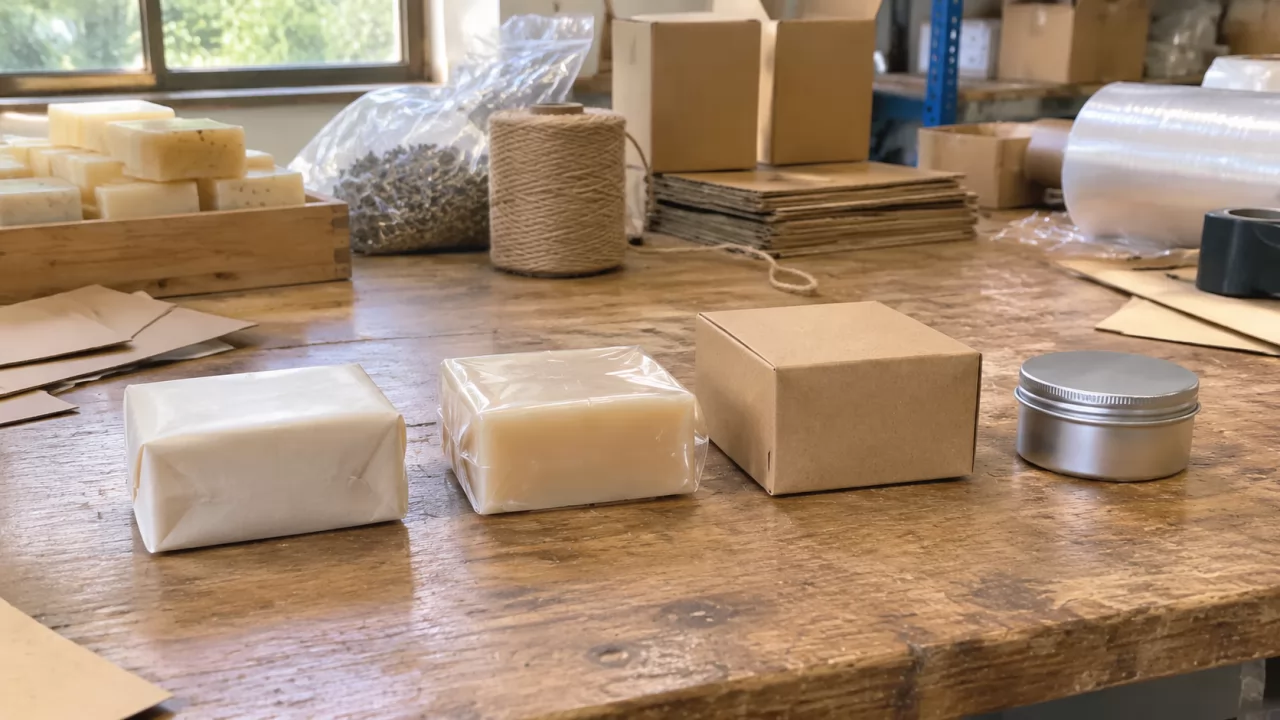
Packaging affects shelf look, protection in transit, unit cost and the minimum order. For soap, the decision is usually between paper, film, a box or a special container, and each one moves the budget differently.
Packaging Options Compared
The table compares four common formats in relative terms only; actual cost depends on your quantity and artwork.
| Criterion | Wrapper paper | Shrink film | Printed box | Tin or special container |
|---|---|---|---|---|
| Look | Simple, handmade feel | Clear, shows the bar | Strong branding space | Gift or premium feel |
| Protection | Basic | Moisture barrier | Good against knocks | Highest |
| Cost direction | Lowest | Low | Medium | Highest |
| MOQ impact | Rarely raises it | Rarely raises it | May raise it | Usually raises it |
| Best for | Tight first runs | Retail with visible bar | Retail shelves, marketplaces | Gift sets |
For a first order, wrapper paper or a printed box keeps the minimum manageable, and you can move to a container once the line sells.
Label And Carton Details
A soap label usually needs the product name, INCI list, net weight, batch code and the name and address of the responsible company or importer. Cartons need marks the forwarder and warehouse can read: quantity, weight, and any shipping marks you specify. Rules for what must appear, and in what language, vary by market, so check the requirements for your destination before you finalize the artwork. A label that passes in one country may be rejected in another.
Artwork Handoff
Send vector artwork (usually AI, EPS or PDF with outlined fonts) and ask the supplier for a dieline, the flat template showing cut and fold lines, for each pack. Place text inside the safe area and leave room for the batch code. Ask for a printed or digital proof and approve it in writing. Reprints almost always come from skipped proofs, wrong dimensions or an INCI list changed after the artwork was approved.
Phase Three: Order And Ship
The goal is a first order that arrives on time and matches the approved sample. The payment terms in the supplied facts are T/T, with 30% prepaid and the balance paid against a copy of the bill of lading (BL). Other methods, including online payment, are also accepted. Production for OEM/ODM runs about 40 days.
Choose the shipping term early. FOB leaves freight and insurance to you, while CIF puts them in the supplier's quote, and the right one depends on whether you already have a forwarder. For large orders, direct shipping to Amazon FBA warehouses is available, which saves a handling step if you sell there. Check the FBA labeling requirements before the cartons are packed, because relabeling at the warehouse costs money.
Closing check: arrange a pre-shipment inspection of the finished goods against your reference sample, and confirm the shipping documents are ready before the balance is paid. Customs inspection services can also be provided.
Launch Readiness Checklist
Tick these off in two groups before you release the balance.
Before production
- Formula approved in writing, with INCI list attached.
- Claims reviewed against the rules of your market.
- Packaging proof signed off, including label copy.
Before shipping
- Shipping term and forwarder confirmed, and FBA requirements checked if relevant.
- Reference sample kept and compared with bulk.
- Quality documents requested, such as GMP-related and ISO 22716 records, where the supplier holds them.
Common Questions
Can I start with only one style?
Yes, in principle. Confirm the per-style minimum first.
Can the formula be customized?
Yes. Custom natural soap formulas are possible through a supplier's R&D team. Test any custom formula before you approve it, and keep the INCI list matched to what is actually in the bar.
Can I say it lightens skin?
No. Lightening and dark-spot claims are result claims, and many markets treat them as drug claims that need evidence. Describe the ingredients, the scent and how to use the bar instead.
Which documents should I request?
Ask for the full INCI list, a safety assessment suited to your market, any test reports the supplier has, and the facility's quality records. Do not repeat a certificate name on your packaging until you hold the document for it.
Next Step
Send our team your one-page brief with the number of styles, bar weight, target market and your logo files. We can review it against the points in this article and quote or arrange a sample from there.