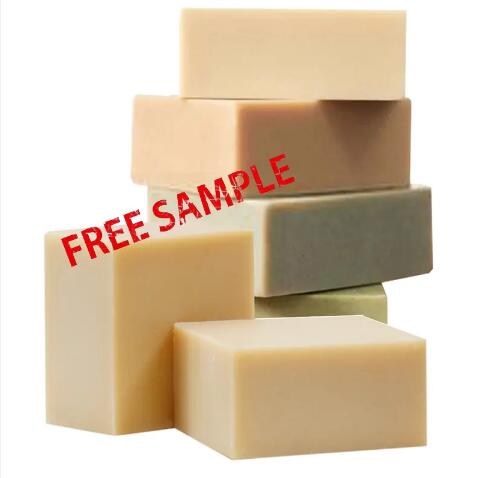

Two brands launch a bar with a similar look. One sells it as soap, the other as a syndet bar. The shape is the same, but the formula and the label are not.
The best bar soap has no single answer. It depends on skin feel, formula type, claims and the market you ship to. Below you will find the formula choices, the production methods, the specs and the paperwork that decide the outcome.
What is the best bar soap for body use?
The best bar soap for body use matches its job, its users and its claims. A good body bar usually has a stable formula, a mild cleansing feel and honest labeling. Past that, "best" is a brief you write, not a ranking you look up.
Cleansing and moisturizing feel
A gentle cleansing bar cleans without leaving a tight, squeaky feel on most users' skin. A moisturizing body soap leaves the skin feeling softer after rinsing. Both describe feel. Neither is a result claim.
The feel comes from the fat and oil blend, from the superfat level (the share of oils left unreacted in a true soap) and from any added emollients. Coconut and palm-type oils give hard bars with strong lather. Olive, shea and similar oils give a softer, creamier feel. Most formulas balance the two. Write the feel as what the bar does in the hand and in the shower, and leave out what it does to the skin over weeks.
Stability from batch to batch
Your customer buys the second bar expecting the first. If the scent drifts, the color shifts or the hardness changes, they notice before you do.
Natural fats and oils vary by harvest and supplier. A stable bar therefore needs a fixed formula, fixed raw material specs and recorded process steps, such as temperatures and mixing times. Ask how a supplier holds those constant between runs. A retained sample from each batch is a simple, useful answer.
True soap and syndet bars are different products
True soap is the product of saponification. Fats or oils react with an alkali (sodium hydroxide for bars) and form soap salts and glycerin. A syndet bar, short for synthetic detergent bar, uses synthetic surfactants instead. It is built more like a shower gel in solid form.
The two are described and labeled differently. True soap lists saponified oils, often written as "Sodium Olivate" or "Sodium Cocoate" in INCI. A syndet lists surfactants such as sodium cocoyl isethionate. Soap is typically alkaline, while syndets can be formulated closer to the skin's own pH. In some markets that difference changes how the product is classed and what the pack may say. Decide which one you are making before you design the label.
Cold process, hot process and melt-and-pour compared
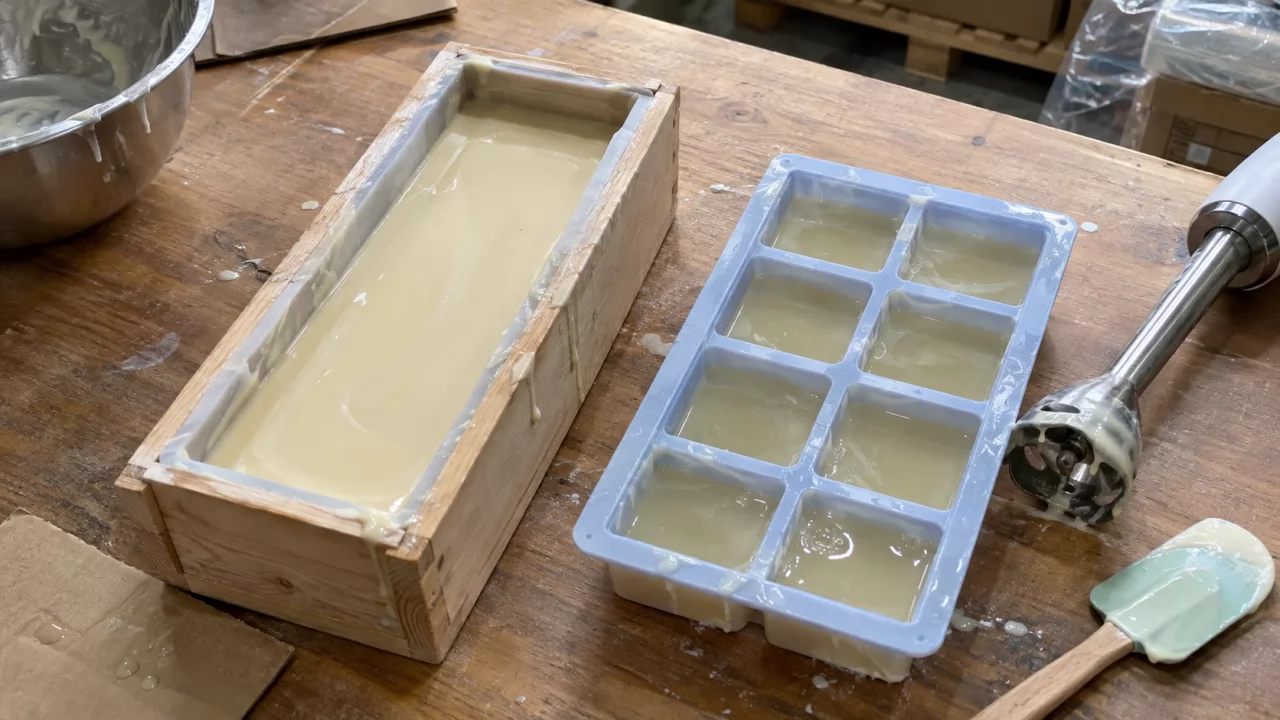
Cold process soap is made by mixing oils and lye at moderate temperatures, pouring into molds and letting saponification finish over days, then curing. Hot process finishes the reaction with heat before molding. Melt-and-pour starts from a ready-made soap base that is melted, colored, scented and poured.
| Method | Feel and look | Ingredient control | Cure time | Fit for private label |
|---|---|---|---|---|
| Cold process | Smooth, creamy; swirls and layers possible | High: you choose every oil | Longer, usually several weeks | Suited to a distinct natural-style range |
| Hot process | More rustic, textured surface | High | Shorter than cold process | Suited to rustic or chunky designs |
| Melt-and-pour | Clear or opaque, very uniform | Lower: depends on the base | None to very short | Suited to fast launches and inclusions |
| Syndet (pressed or cast) | Uniform, firm | Depends on surfactant system | Short | Suited to facial or sensitive-positioned lines |
Cold process gives the most formula control at the cost of time. Melt-and-pour gives speed at the cost of control. A brand built on a "made from oils we chose" story needs cold process or hot process. A seasonal gift set with fast turnover may fit melt-and-pour better. Cure time also ties up factory space, which can affect the lead time you are quoted.
How to choose bar soap for your own label
Settle the use case and market first, then the ingredient list, then the delivery specs. That order resolves most questions early.
Fix the use case and the market first
Body, facial, baby and men's bars carry different expectations. Facial and baby bars draw more scrutiny on mildness wording and, in some markets, on testing. Men's bars lean on scent and a firmer, longer-lasting bar.
Then check the rules where you will sell. The EU, the UK, the US and Canada each regulate cosmetics differently. A bar that makes cleansing-only claims is treated differently from one that claims a skin effect. Confirm requirements with a regulatory adviser for your market. A manufacturer can supply formula and documents, but the market check is yours.
Read the ingredient list as INCI
INCI is the International Nomenclature of Cosmetic Ingredients, the standard naming system on cosmetic labels. Your supplier should give you a full INCI list, and the pack must match it exactly.
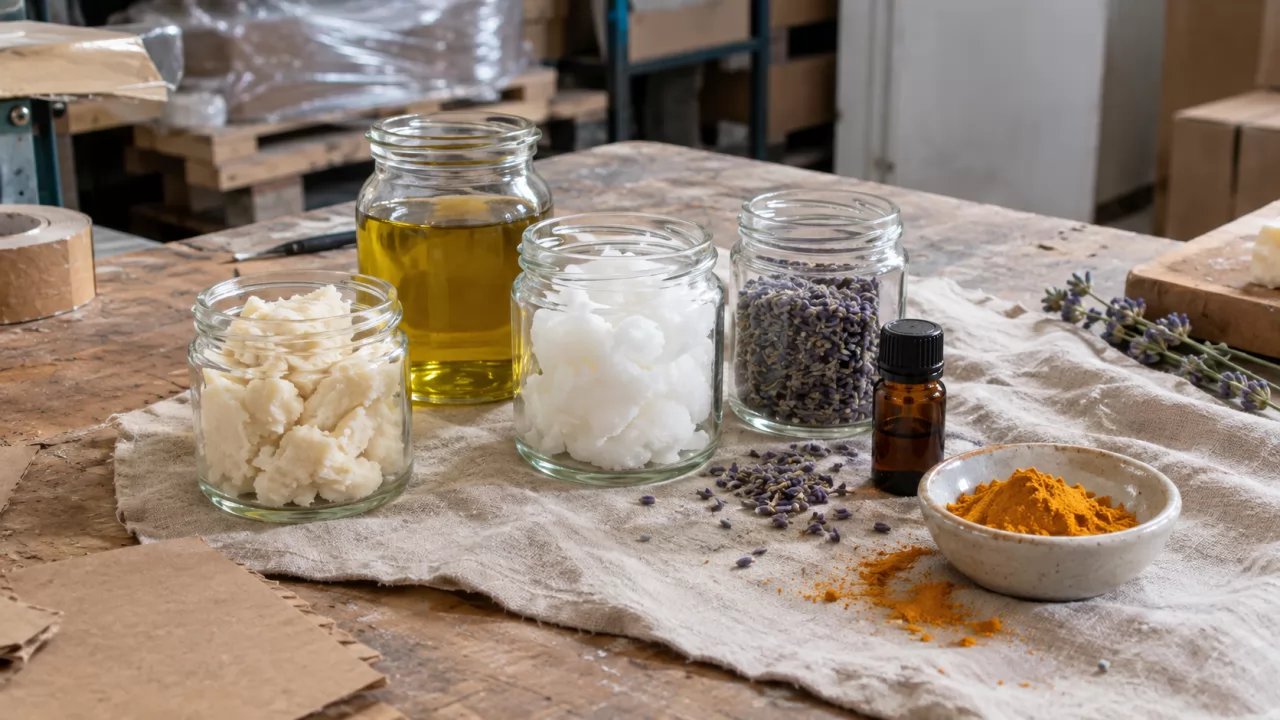
Look at four groups. Fats and oils set the feel and the base of the bar. Fragrance, whether essential oils or fragrance compounds, decides which allergens may need to be declared in some markets. Colorants matter because some are not permitted everywhere. Additives such as clays, botanicals or exfoliants change texture and can affect stability. A change in any one of these changes the INCI list, and so the artwork.
Set the specs you will check on delivery
Write them into the purchase order. Start with bar weight and size, with an agreed tolerance. Add hardness, since a bar that is too soft turns mushy in a wet dish. Agree scent and color against an approved reference, because handmade bars vary slightly and you should set how much. Last, check packaging fit: the bar should sit in the wrap or box without rattling or being squeezed.
Decide the use case, the market and the formula type before you talk about color and scent. Those three drive every other cost and delay.
Handmade bar soap benefits come with claims you must be able to support
Handmade and cold process bars offer formula flexibility, since you can choose oils, butters and additives one by one. They also have a look that machines struggle to copy, such as swirls and natural color variation. Brand owners can tell a story about how the bar is made.
The story needs care. "Natural" has no single legal definition in many markets, so describe what is in the bar and where it comes from rather than leaning on the word. A "best natural bar soap" positioning is a marketing choice, not a claim a regulator will accept at face value.
Claims such as organic, vegan or hypoallergenic need documents or test reports behind them. Organic needs a matching certificate. Vegan needs ingredient confirmation from every supplier. Hypoallergenic needs testing. If you cannot hand over the paper, leave the word off the pack.
Mistakes and myths that force a reformulation
Natural means gentle for everyone. It does not. Plant ingredients, including essential oils, can irritate some people, and people react to different things. Describe the formula and let users judge.
A handmade bar needs no compliance paperwork. It does. A handmade cosmetic is still a cosmetic, and markets typically expect ingredient lists, safety documentation and proper labeling regardless of scale.
A scent or color change is a small edit. It is not. A new fragrance can alter the allergen declaration, the safety assessment, the bar's hardness and the way the color holds. Treat it as a new version and sample it again.
Skin-benefit wording is harmless marketing. Words that suggest treating a skin condition or changing the skin can move a product from cosmetic to drug in some markets. Keep wording to cleansing, feel and scent.
The sample proves the bulk run. It proves the formula, not the run. Bulk production adds batch size, equipment and timing. Compare the first production bars against the approved sample before you release the whole order.
Samples settle what specs cannot
A sample shows how the bar feels, smells and holds up, which a spec sheet cannot. Plan a patch test with your own panel or testing lab before launch, and ask which tests the supplier already holds. For shelf life, keep bars in their final packaging and inspect them over time for sweating, cracking, discoloration and scent loss.
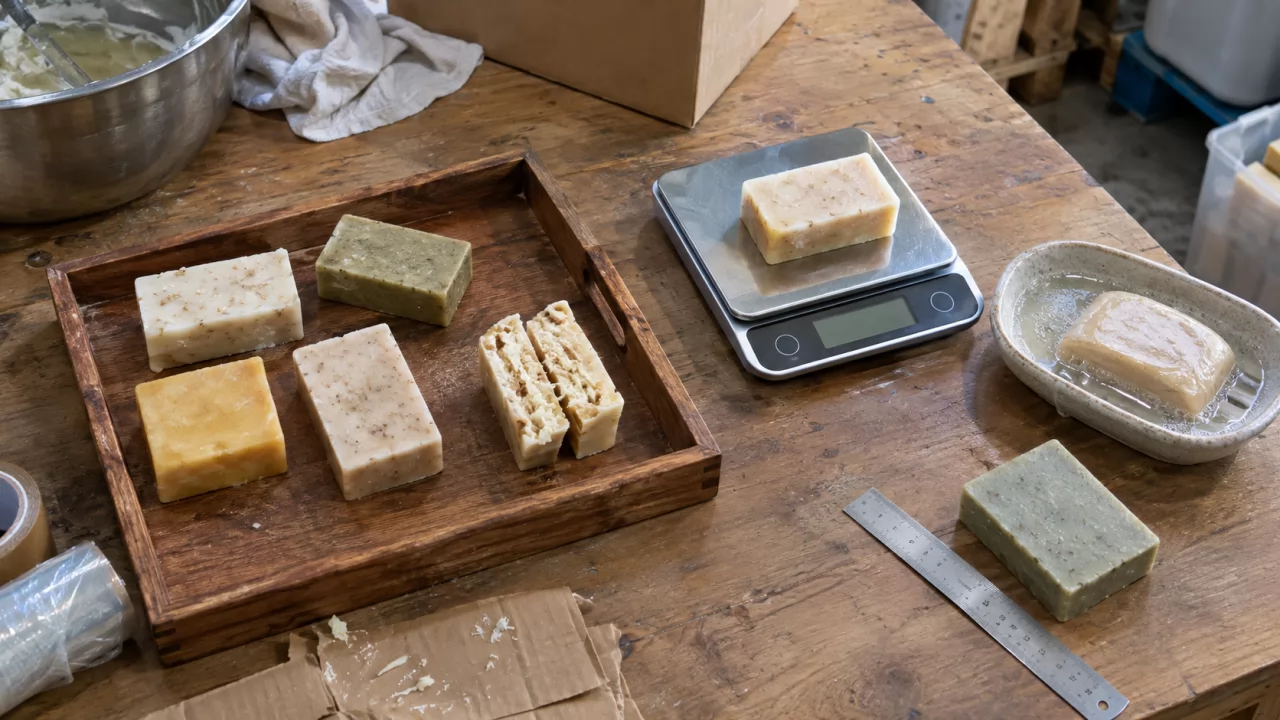
Test the bar wet and dry. Leave one in a damp soap dish and see how fast it softens. Store another dry and watch for shrinking, warping or a powdery surface. Poleview makes custom natural soap formulas for private label and offers free samples, with the buyer paying freight. Lead time for a private label order is usually about 40 days, and it shifts with design, packaging and the season.
FAQ
Is handmade bar soap better than commercial bar soap?
Not automatically. Handmade bars give more control over oils and design, while commercial bars often win on uniformity and cost. The right one depends on the brand story and the user.
Can I use my own formula, and who owns it?
Yes, you can supply your own formula or request a custom one. Ownership depends on what is written in your contract, so agree it before development starts.
What documents should I ask a soap manufacturer for?
Ask for the full INCI list, a safety data sheet, and the certificates the factory holds, such as GMP or ISO 22716, with the documents themselves. Ask for test reports for any claim you plan to print.
How long does a private label bar usually take from approved sample to shipment?
About 40 days for OEM or ODM production. Cold process cure time, custom packaging and shipping method can move that.
Next step
Send the use case you have in mind and a logo, and ask for a sample. Our team can reply with formula and format options for you to compare.